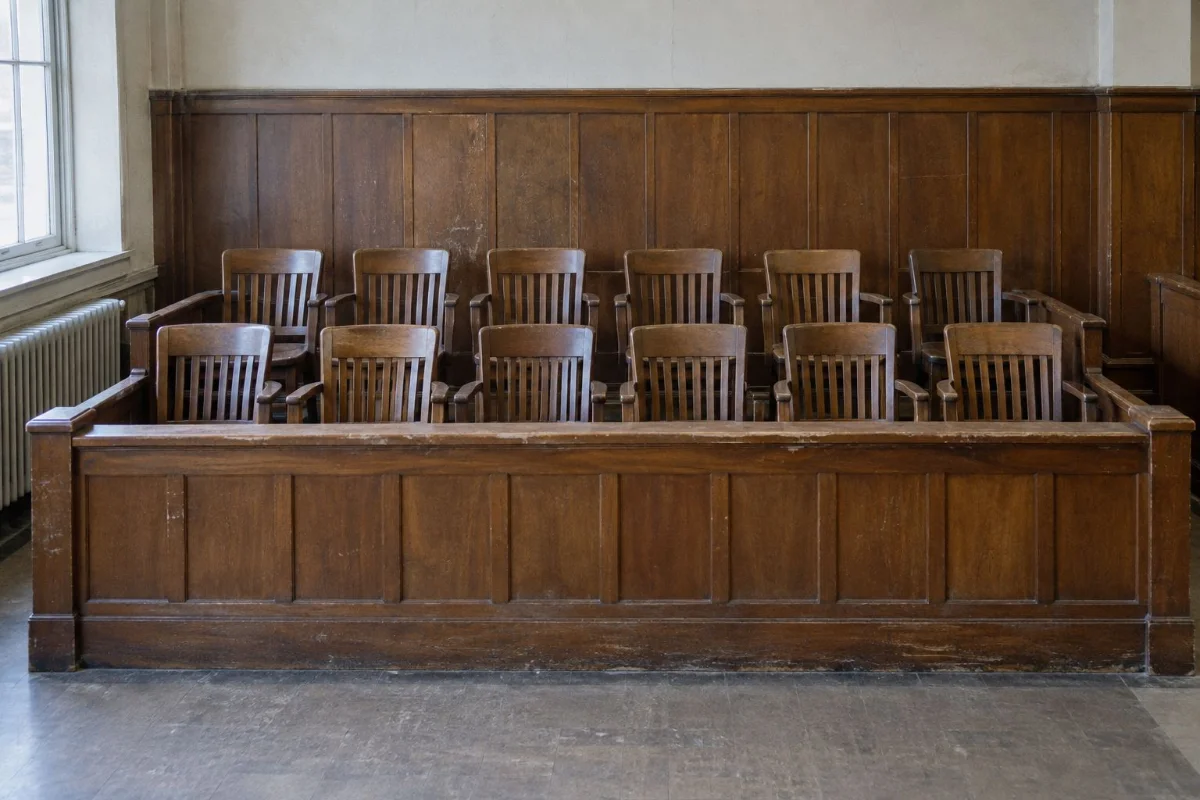
Juries are usually right.
This one was working blind.
When people first hear this case, they ask the same question: if the evidence is that thin, how was he convicted? The answer is not a mystery. There are glaring failures, each documented, each of which the jury never saw behind.
His lawyer was addicted to cocaine and alcohol during the trial.
The exculpatory witness who could have ended it was never called to testify.
The “murder confession” came from a jailhouse informant who was rewarded, and who recanted.
Temujin wanted to tell the jury where he was. His lawyer wouldn’t let him. A juror later said the silence looked like guilt.
The one identification of the driver came from a hypnosis session where police supplied the details.
Radar and fuel records could have tested the flight theory in 1986. No one ever looked.
In the photos police showed the witnesses, his picture stood out from all the others. The jury was shown a different version.
The only witness who called the flight possible had flown the prosecutor’s own campaign. The jury was never told.
Each of these failures were unknown at trial and resulted in
life in prison without parole.
An informed jury would have been deliberating a different case.
Part 2: What the courts did with it afterward
The jury trial verdict was May 18, 1987 and Kensu was later sentenced to life in prison without parole. What follows is serious attempts to challenge that verdict.
Built for finality.
The system that heard those attempts is built for finality: a jury verdict is reviewed only for specific legal errors, on deadlines, under rules that grow stricter at every step. The question in front of each forum below is never "did he do it."
Four weeks after the verdict, the same lawyer who never called the exculpatory alibi witness asked for a new trial because of her. Denied: she wasn’t “new evidence,” because he had known about her all along.
The direct appeal took seven years and three courts. A year to get a lawyer, two grounds argued, a hearing ordered, a one-page denial, and no one, at any step, re-examined whether he did it.
The informant came back to court and swore he made the confession up. He named what he’d been promised. Kensu stayed in prison, and the informant died waiting to be believed.
By now the case had Woodworth’s sworn account and the informant’s recantation on tape. The court’s answer: all of it arrived too late.
The first judge, Denise Page Hood, to read the whole record found four constitutional violations and ordered him released or retried. For 19 months, a federal court order said this conviction could not stand.
Reversed, on a filing deadline. The appeals court never disputed what Judge Hood found wrong. Temujin had simply asked for justice too late, under a law passed nine years after his trial.
The lineup photos surfaced after two decades missing, and an expert counted more suggestive factors than she’d ever seen. Denied: not “new” enough. One judge wrote Judge Hood had been right all along.
A federal court agreed the new evidence was strong enough to earn a rare second petition, then denied it under the strictest standard in American law. Strong enough to hear. Not enough to act.
The state’s own integrity unit held the case three years and closed it by letter: no finding of guilt, no finding of innocence, no answer at all.
Eight courts and one state review. Four decades.
Not one ruling, since the jury, on whether he did it.
No court has ever denied this man relief based on the evidence of the case. Problems were found; relief was denied on procedure. A judge wrote the trial was flawed; relief was denied on timing. Forty years of the answer “not our question.”
It is the Governor’s question. It has always been the Governor’s question.
Her term ends January 1, 2027.
You’ve seen how it happened. Be part of how it ends.
Her term ends in 95 days.